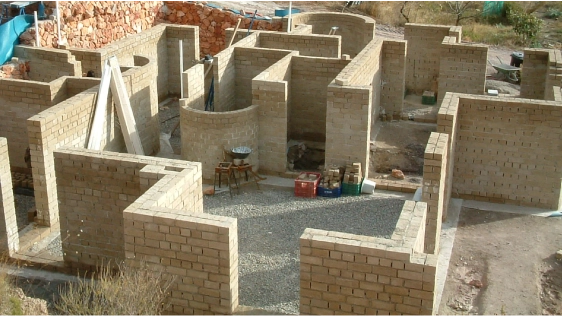
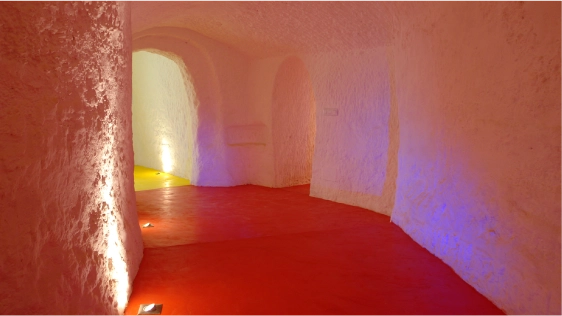
Cataloged country house, before 1777, of 196 m2, with an evolutionary floor plan and cubic volumes modeled on the natural topography. Over the course of history it has been periodically rehabilitated using almost exclusively natural solutions, guided by the traditional typology, materials and colors, having undergone few material-technical changes in recent decades (areas covered with hydraulic tiles, cement floors, layers of hydraulic concrete roofs, cement plasters, rectangular beams).
After years of neglect, a progressive destruction of the roofs due to leaks and the need to adapt the house to today’s living conditions, a compatible intervention is required to ensure the preservation of this heritage, which is only possible with porous and hygroscopic materials and technologies that ensure continuity with those used in the past without causing subsequent pathologies.
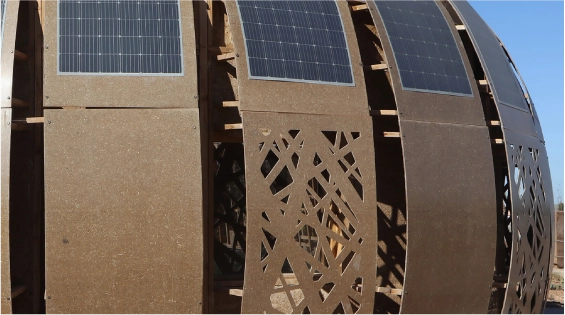
A cistern well and the ceramic pipes for draining rainwater from the roofs will be recovered. Heating will be hybrid, with a biomass stove (taking advantage of the farm’s resources) and a radiant heating circuit. The production of electrical energy will be solved with photovoltaic panels.
The sewage network will lead to a total oxidation treatment plant. It is a respectful intervention in the structure and its landscape and architectural environment, aimed at adapting a high standard of comfort to the vernacular housing, without compromising the character and textures of this beautiful type of architecture.